UA Capitol Studios: Hollywood’s rooms and echo chambers in a plug-in
Since 4 November 2026 the rooms of the Capitol Tower run in any DAW, no UA hardware needed. Here is what is inside and where it makes sense.
- Capitol Studios is a native room modelling and reverb plug-in for macOS and Windows, available since 4 November 2026 at $249.
- It includes Studios A and B, the four echo chambers beneath the Capitol Tower, a locker of historic microphones and a Decca Tree.
- It is included with a UAD Spark Studio subscription and needs no Universal Audio hardware.
- It is not a reverb for everything: it shines when a close-miked sound has to feel as if it was played in a real room.
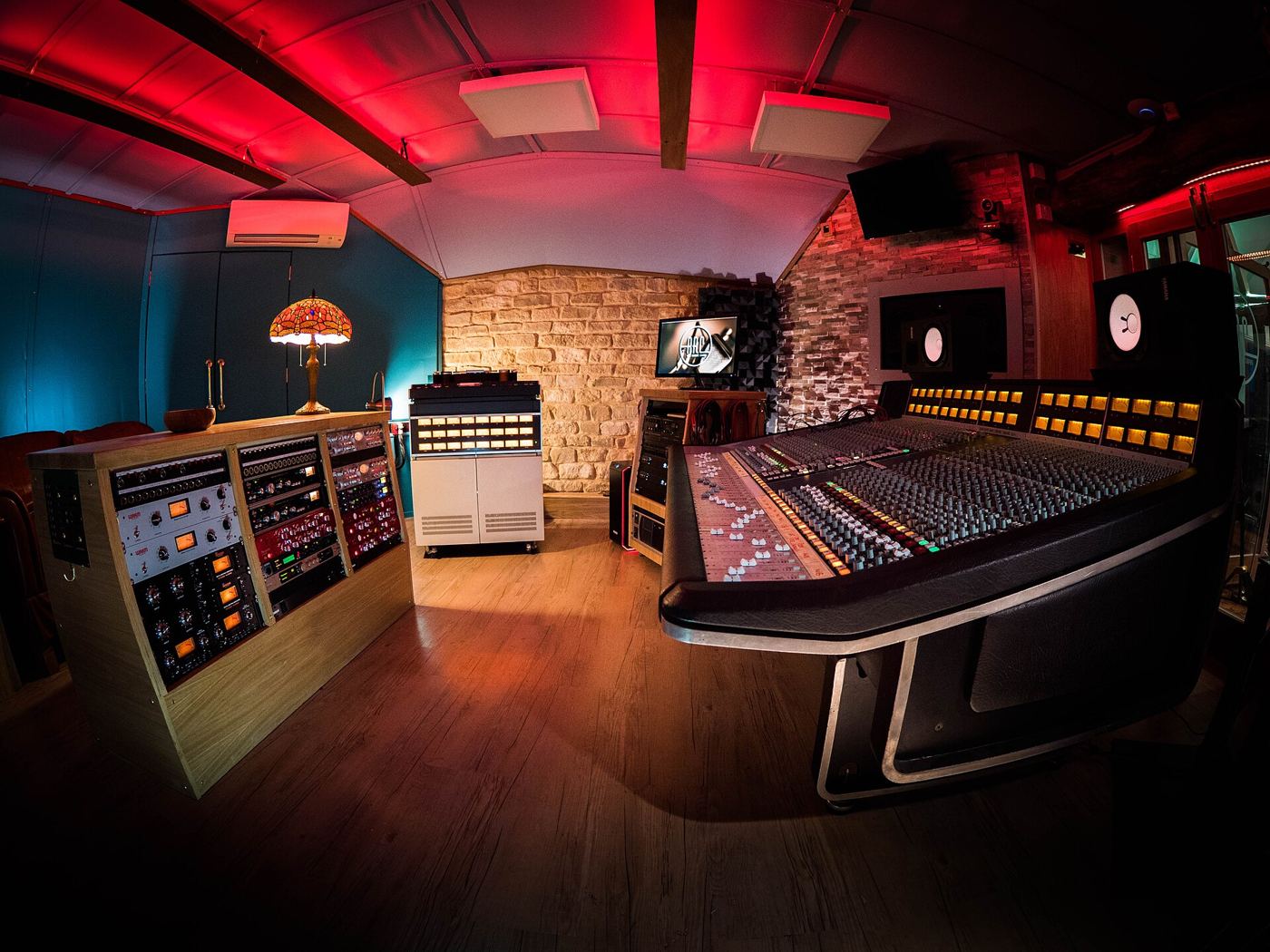
For anyone in this job, the Capitol Tower in Hollywood is more than a building shaped like a stack of records. It is one of the few studios in the world where the sound of the room became part of the sound of the records. The tower opened in 1956, and under the car park are its echo chambers: concrete rooms designed to reverberate, with a speaker at one end and microphones at the other. For decades, when an engineer wanted to “put the vocal in the chamber”, the signal went down there and came back up.
Universal Audio built the plug-in with the Capitol team and released it on 4 November 2026. In this article I explain what is inside, how a room plug-in really differs from a classic reverb, and how I would use it in a mix, with concrete examples.

What is inside the plug-in
Studios A and B. The two main tracking rooms. You do not just pick “the room”, you also choose where the microphones go: you can drag them around and the space changes in real time. Moving a mic closer gives more presence and less room; moving it away opens the scene and adds the early reflections from the walls.
The Historic Mic Locker. Capitol’s collection of vintage microphones. The starting positions were curated by Capitol alum Steve Genewick, so you do not start from scratch: you start from how mics are really placed in those rooms.
The Decca Tree. The classic array of three microphones on a T-shaped bar, used for decades to record orchestras, strings, horns and vocal groups. It gives a wide but stable stereo image with a solid centre.
The four echo chambers. You can use them as a reverb in their own right, on a send, exactly as engineers did in the real studio.
The presets. Settings from past and present Capitol engineers, producers and musicians: a great starting point to understand how those rooms “think”.
| Release | 4 November 2026 |
| Price | $249 |
| Systems | macOS and Windows, native plug-in |
| UA hardware required | no |
| Subscription | included in UAD Spark Studio |
Room plug-in or reverb: what is the difference
A traditional reverb, whether plate, spring or algorithmic, adds a tail to the sound. A room plug-in does something else: it simulates what happens when a source plays in a physical space and is captured by microphones at a certain spot. That changes three things the ear notices immediately.
Early reflections. In the first 20 to 80 milliseconds come the bounces from the nearest walls. More than the tail, they tell the brain how big the room is and how far away the sound is.
Tone. A real room does not reflect every frequency equally. Wood, concrete and curtains change the colour of the sound. That is why a vocal “in the room” sounds warmer or more open, not just longer.
Stereo image. With two or three microphones, the sound reaches each capsule at slightly different times. That creates a wide, natural scene, very different from a synthetic stereo reverb.
How I would use it in a mix
A room plug-in does not belong on everything. I use one in three specific situations.
1. To give a close-miked sound a place. A vocal recorded in a bedroom, ten centimetres from the mic, sounds “glued” to the speakers. A small amount of room, with the mics close, places it in a space without pushing it back. The trick is to use it in parallel, on a send, with the room signal very low: you should hear it when you remove it, not when you add it.
2. To glue different elements together. Sampled drums, a DI guitar, synths: three sources that never shared a space. Sending them all, in different amounts, into the same room makes them sound as if they were played together. It is the same principle as a good mix bus compressor: consistency first.
3. For the tail, with the echo chamber. On vocals and snare, the chamber gives a dense, soft tail that an algorithmic reverb struggles to imitate. I always filter it: I cut below 200-300 Hz so the low end does not get muddy, and a little above 8-10 kHz so sibilance does not hiss.
One real room gives depth. Three different rooms just give confusion.
The most common mistakes
Too much room on the front elements. Lead vocal and kick must stay close. Send them too far into the room and the whole mix steps back.
A different room for every track. Every reverb describes a different space. Three or four spaces in the same song confuse depth instead of creating it.
Forgetting phase. A multi-mic capture summed with the direct signal can cause cancellations. Always check in mono after adding the room: if the sound goes hollow, move the virtual mics or lower the level. More in the article on phase and mono compatibility.
Not filtering. The low end of a reverb is the number one cause of muddy mixes.
Is it worth $249?
If you mix acoustic music, pop with real instruments or soundtracks, or you often have to “rebuild” a space for tracks recorded at home, yes: a generic reverb does not replace it. If you work mostly on electronic music with synthetic sounds and mainly need long, creative tails, you probably need it less. In that case consider it inside the UAD Spark Studio subscription, where it is included.
Frequently asked questions
Do I need a Universal Audio interface? No, it is a native plug-in that runs on your computer.
Can I use it as a normal reverb? Yes, the echo chambers work very well on a send. But the real value is in the room simulation.
Should I put it on the master? No. A shared space is built in the mix, track by track. On the master it would only smear things.
Before adding space, listen to whether the mix already has its own depth. Often, taking reverb away from the front elements lets the ones behind breathe, as I explain in the article on reverb and delay.